Organic and Non-Organic Farming

Organic and Non-Organic Farming are two completely different approaches in the agriculture farming industry which possess obvious differences between them. Organic Farming is a natural beneficial way of sustainable field crop farming which is highly essential for a healthy and eco-friendly environment to cultivate delicious nutritious vitamins and minerals enriched yield food crops for customers. It contains all essential factors such as green manure, composting, crop rotation, biological pest control, mulching, and intercropping. Non-Organic Farming is a harmful conventional way of quickly growing crops for the purpose of the increase in quantity in a short span of time. It employs all hazardous practices such as artificial synthetic chemical fertilizers and pesticides which provide severe damage to soil and make it less fertile to grow yield crops. The following are the comparative differences between organic and non-organic farming practices:

Crop Yield

Crop Yield is an essential factor to determine the amount of crop produced in an entire year of farming. The organic farming practice provides limitations of producing a larger quantity of crops due to the high nutritional value of soil. Conventional farming has the capability to produce maximum yield crops by means of synthetic pesticides and fertilizers to grow more crops in a less period of time.

Eco-Friendly Environment

The environment plays a vital role in better-nourished farming crops with good soil fertility. Organic farming is extremely beneficial for a healthy safer eco-friendly environment to help make fertile soil to produce nutrients enriched food crops. On the contrary, Conventional farming is really bad for the environment and causes adverse global effects like global warming and climate change which are disastrous for the farming industry.

Soil Health and Nutrition

Soil Health and Nutrition are core elements of farming which can result in better crop production with increased nutritional value.  Organic farming is a good practice for enhancing soil conditions with more productive fertility by means of crop rotation which helps cultivate fresh root-soil with mixed nutrients such as minerals and vitamins to provide delicious food crops for customers. On the other hand, Non-Organic farming destroys a soil condition with erosion and makes soil much dry and barren with the use of chemicals leaving no more chance of land cultivation for many years. By comparing both of the above farming practices, we see more beneficial features in the organic way of farming in terms of health, environment, and food safety. It has now become a positive trend to shift to organic farming to have a healthy better lifestyle with homemade delicious diet food.
Agriculture and Climate Change

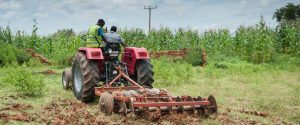
Agriculture is an essential source of producing and supplying food to the mass majority of people from the rural to the urban cities of the world. It involves a complete process of mechanized field tractor farming on a small and large area of arable land such as fertilizing, irrigating, crop rotating, seed planting, and crop harvesting, etc. This whole process requires a suitable amount of climate and weather conditions for organically growing field crops as a little bit change in climate can bring an unexpected disaster and badly damage field crops which can cause a huge financial loss for farmers with an increase in poverty and hunger. There is a strong relationship between agriculture and climate and a good combination of harmony can bring a positive change in flourishing agriculture all around the world because a majority of the countries today are entirely or partially dependent on a stable agriculture economy with a purpose to better fulfill the growing requirement of food and hunger on a global scale. The change of climate is caused by plenty of reasons such as global warming and greenhouse gas emissions. These two are major factors in depleting an ozone layer by widening a gap to emit harmful ultraviolet rays from the sun which is a real cause of changing weather conditions with increasing intensity of heat and cold in many parts of the world. The Greenhouse Gases include Carbon Di Oxide, Methane, and nitrous oxide which are extremely hazardous for environmental pollution and increase heat warming in the world. Deforestation is also a serious reason for climate change which can put negative impacts on the environment which can lead to adverse consequences for agriculture and badly damage yield crops such as excessive rainfall, drought, a rise in sea levels, melting of ice glaciers, and heavy stormwater cyclones. Tree plantation is the best remedy to reduce global warming as trees and forests provide a true shade in the heat and are helpful in generating an abundant source of fresh oxygen for a healthy eco-friendly environment. Organic farming is another beneficial way to help reduce global warming to the maximum extent and it also helps in producing natural healthy bio-diversity nutritious genetically modified food crops. GM Crops provide the best solution for tackling food security issues prevailing in the world by means of taking DNA Genes from plants to reproduce another plant of the same matching characteristics to help provide pest control and drought resistance with healthy fertile soil.

How To Increase Agriculture Farming While Using Tractors

How did the tractor improve agriculture?

tractor improve agriculture

Tractors are agricultural farming machines that have simply revolutionized the way of farming by making it more efficient and convenient. Today, there is much more ease for farmers than decades back when the traditional oxen cart method was used where there was two bullocks (oxen) were tied by a 4-wheeled wooden cart and forcefully used to drag it forward for the core purpose of plowing on fields. Modern tractor farming has brought a radical change in field farming by transforming the old conventional method of manual oxen farming into mechanization. It has reduced human effort to a maximum level and brought ease of comfort with more productivity in less time. Nowadays, tractors offer multiple uses and implementations for farmers to perform their task much effectively. There are plenty of benefits of increasing agriculture farming with the help of mechanized tractors:

Increased Crop Production

Maximizing Crop Production is the first and foremost benefit of agricultural mechanization as it greatly helps farmers to yield an increased amount of crops with less cost of labor. The cutting cost has provided a true advantage of quick task execution by saving a lot of money on extra manpower.

Better Productivity

Productivity is the essential element in agriculture farming where performance is increased by double with a rate of better efficiency of task execution and maximum crop production. Now, a farmer can easily cover a wide area of land for plowing, tilling, cultivating, planting, fertilizing, and seeding tasks.

Durability and Versatility

Durability and Versatility are two integral factors that cause more amount of work with longer hours of tractor working capability and performing a variety of tasks on a single machine. Implements attachment helps create a versatile mechanized task performance in less time for farmers.

Time-Saving

Time-Saving is a key reason for using tractor farming as it helps saves a lot of time and performs tasks in a few minutes which were used to be done in hours. It has simplified complex tasks with ease of efficiency for farmers. It has maximized results with the finest quality plowing, reaping, and crop cultivation.

Low Cost of Production

Tractor Farming has helped decreased the cost of work with less manpower labor and more efficient task output performance. It has rapidly increased the income of farmers by making them more prosperous than ever before. Tractors provide a lot of help in increasing farming productivity by doing complex tedious tasks in an easy and effective manner. It is built with a robust compact design with the dynamic powered engine to forcefully pull heavy loads with hydrostatic and power shift transmission for a smooth plough on the agricultural land field.

Crops of Africa – Agriculture Farming

The Vast Arable Land of Africa has long been an origin of producing diverse variations of crops which have been exported to global customers worldwide. Today, it provides feed to the largely growing population of the African continent by means of mechanized agricultural farming covering a wide area of land for cultivating all different kinds of cereal, vegetable, and fruit cash crops. There are countless species of crops grown on African land mainly cultivated crops are named as Sorghum Bicolor, Yam, Millet, Maize, and Cassava. Sorghum Bicolor is a native African field crop originated from Nigeria and better known as Camel of Crops because of the reason of commonly planted in tropical dry soil as well as good temperature and high altitude environment. It highly contributes to providing high-quality nutritious feed for 500 million people in more than 30 countries all around the world. This edible staple food crop is beneficially used for animal fodder such as poultry and cattle feed.

As a high nutritional value human food diet, it is used as an excellent resource of a fulfilled meals such as porridge, couscous, fermented bread, and snacks fully enriched with proteins, zinc, iron, phosphorous, and vitamin B –Complex. Yam is a kind of tropical tuber root crop having a cylindrical shape and rounded ends mostly cultivated in central, western, and eastern African regions. It is a largely grown crop in Sub-Saharan Africa with 54 million tons and mostly produced in Nigeria, Benin, Togo, Ghana, and Cote D’Ivoire. It helps in increasing soil fertility by means of weather conditions, seed quality, planting density, and many other related factors. It offers multi-nutritional value in food such as potassium, vitamin b6, manganese, thiamin, and vitamin C.

The Yam prepared meals are Amala, Pounded Yam, Fried Yam, Palm Oil Yam, and Roasted Yam. Some other popular Yam Varieties are White Yam, Chinese Yam, Bitter Yam, and Cush-Cush Yam. Millet is a whole cereal grain crop ideally used for both human food and animal fodder. It is mostly grown in the semi-arid tropical areas of Africa especially in Nigeria, Mali, Sudan, Ethiopia, Senegal, and Burkina Faso. It is a small-grained warm weather cereal food staple crop that is highly tolerant to drought and requires extreme weather conditions for cultivation.

The widely grown millet crop is pearl millet some other famous crop species are finger millet, proso millet, and foxtail millet. It contains an excellent nutritional value and mainly used in multiple varieties of food cuisines such as millet porridge. Maize is a cereal grain crop mostly planted in cold-tolerant temperature zones especially in the spring season. It has a shallow root system and basically dependent on soil moisture as a water-efficient crop. It is also commonly known as corn which is a highly beneficial edible food meal for humans composed of a rich amount of nutrients and used in corn oil, popcorn, sweet corn, corn flakes (breakfast cereal), porridge, snacks, and gluten-free bread. Some other commercial uses are herbal supplements, plastics, fabrics, adhesives, and biofuels.

Cassava is a highly valuable tropical root cash crop that provides a major source of food dietary energy from its starch. Africa produces 93 percent of the cassava in the world which is the highest consumed proportion of global cassava production. It is widely used in food, flour, animal feed, textile, and prepared foods. It is an essential food crop for both rural and urban populations of Sub-Saharan Africa such as Nigeria, Mozambique, Zambia, Congo, Ghana, Malawi, and Tanzania. It can be consumed as Root Cassava, Dried Cassava, and Cassava Leaves and contains a source of nutrients like Carbohydrates, Fiber, Thiamin, Phosphorous, iron, vitamin C, Potassium, Zinc, and Calcium. These are all essential food crops natively produced on African Land and helps provide food fulfills the challenging demand of the growing population of the country to have a healthy nutritious diet food.

Hand Tractor for Cultivating

What is hand tractor in agriculture?

Hand Tractor is a manually operated tractor tilling machine used for cultivating a bigger area of land. It is also popularly known as power tiller which is attached with high powered motorized horsepower engine 2-wheel tractor controlled by an operating person walking behind it for propelling a tractor ahead. It is a single axle walking type handheld tractor designed for performing difficult laborious farming chores such as turning, aerating, and cultivating the soil for easy planting crops and offers a tremendous capacity of preparing about 1 hectare of land in 8 to 10 hours of the specified time.

In which year the concept of power tiller was introduced?

Hand-Held Power Tiller was initially introduced in the year 1920 and later on launched in Japan in 1947 with a basic core purpose of aerating and preparing the soft fertile productive soil for harvesting with maximum yield crops. It is built with sets of sharp-edged blades known as tines composed of four curving cutting blades in opposite directions which are mounted on a gasoline or electric motor powered tractor for deeply piercing inside a lumpy clogged soil for rotating and inverting it to make a smooth and soft soil surface for easy plantation.

How do the tractor tilling machines help in farming?

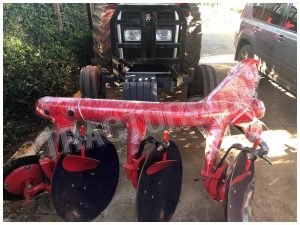
The basic idea is to prepare nutrient-enriched fertile soil for growing crops for a healthy meal for customers. This multi-purpose light-duty hand tractor power tiller can be used for versatile agriculture farming task operations such as plow discs, soil leveler, thresher, and trailers. The core benefits of hand power tiller are an expansion of cultivable land, improved farming operations with ease of task execution, time-saving for farmers with less labor exhaustion, and more task efficiency. It provides key functions of tilling, loosening, ridging, furrowing, weeding, digging, cultivating, and can be used for any kind of hard, soft, moist, muddy, and paddy soil field. Moreover, it can help in growing a huge variety of crops such as tea, bamboo, banana, corn, potato, coconut, tomato, tapioca, and vegetables with a wide export market demand in Asia, the Middle East, Africa, Central Africa, and South America.

Hand Tractor is an easy to use tool ideal for agriculture farmers to smoothly perform all kinds of farming operations with no more exhaustion. It provides a lot of efficiencies and executes tasks quickly in less period of time. It is the best choice for all farmers around the world for easily performing difficult farming tasks with a high-performance electric power engine for quality yield crop plantation for better productivity.

Farm Vehicles Used for Agriculture Farming

Farm Vehicles are mechanized vehicles mainly used for agriculture farming and ranching purposes. In the modern technological era of today, it is now a better practice for global farmers to save time and effort and use mechanized farming equipment which provides an extreme level of task efficiency with an increase of productivity. Following are some of the essential farm vehicles,

Tractor

The primary use of tractor on the farm is to basically carry goods from one place to another place. A chicken poultry farm can use a tractor to carry the eggs and meat and other processed products either to the market or to the end-user. Using a tractor for this operation has two core reasons, one is that tractor can pull a lot more weight compared to a vehicle, and secondly, it can also be used for the farming at the same time so the tractor is two in one machinery which can perform multiple tasks while being economically feasible to keep and maintain. Apart from essential farming tasks, a tractor has many different usages in vegetable farms, fruit orchard farms, crop farms, and home gardening for lawn mowing purposes. Different kinds of implements are also attached with a farm tractor for maximizing efficiency and ease of operation such as loaders, discs, ploughs, and harrows for executing multiple tasks in an instant manner.

Trailer

The trailer serves a basic purpose of towing attachment with a tractor in farming for easily transporting stuff to any area in a whole farm. It can be attached to any kind of tractor and used in carrying a bulk amount of goods from one place to another. 

Tipping Trailer

Farm Tipping Trailer provides the best usage in transporting soil, sand, hay, fertilizers, wood, and timber from a single place to another in a farm area. It offers ease of loading and hydraulic lifting capacity of a bulk amount of goods. Moreover, it also serves the purpose of green waste garbage collection and provides a towing attachment as an implement of a tractor.

Farm Trolley

Farm Trolley is a farming vehicle used for carrying goods from one place to another. It provides easy towing capacity with tractor attachment and transports a large amount of stuff. It can be easily moved around on a farm to any area and used in multiple farming applications. Farming Vehicles are designed to save time and labor effort and attached with a tractor for moving goods to any place in a specified farm area. These are tractor attached towing implements for carrying farming goods with much ease of loading capacity.

How Tractors Assist In Dairy Farming

Dairy Farming is an exclusive category of farming that provides a complete cycle of producing, processing, and delivering dairy products especially milk. Milk is the largest dairy product retrieved from dairy farms by taking good care of animals. Other than milk, there are plenty of dairy products also produced such as cheese, butter, and curd. It requires a whole process of milk production and distribution to consumers. It has a background history dated back from 11,000 years ago where cattle were used to breed in a domestic home environment for a purpose of milk production.

The cows are fed with organic feed to enable them to give out a maximum amount of milk. Apart from cows, there are also some other animal species used for milking such as goats, sheep, and camels. There are many different ways of milking including hand milking, vacuum bucket milking, milking pipelines, milking parlors, and fully automatic robotic milking.

what is the uses of agricultural equipment?

Tractors and farm implements

agriculture equipment used for plouging, harvesting, tilling and cultivating field crops. They have also plenty of usages in other kinds of farming like cattle farming and dairy farming. They play a pivotal role in the dairy farming industry as they provide extensive assistance to farmers in performing various kinds of tasks such as pumping out of milk from the mammary glands of cows, storage, and delivery. They also provide immense help in cleaning out of barns and milking parlor as well as harvesting of agriculture field crops.

There is also much use of implements attachments in dairy farming, for instance, hayfork which can be easily mounted on the front side of the tractor to manually remove hay used for animal fodder. Some implements can also be attached to the rear side of tractors like manure spreaders and seeders for chopping outfeed for animals. The trailer can also be attached to a tractor for ease of dairy milk delivery transportation to the processing plant for a channel distribution to customers.

Tractors PK have been providing core assistance to farmers from all over the world whether in Tanzania or Botswana, Be a traditional farmer or a dairy farmer. Our tractors and implements have been used by the farmer of all scales. Our dedication and quality in this regard has been fruitful for both ends. If you would like to know about our agricultural tractors and implements please do kindly contact us on the following and our experienced sales staff will quickly get in touch with you.

Top Farm Tractors Export from Pakistan to Africa

Tractors Export from Pakistan

Pakistan is a growing market of major farm tractors exports as it has an increasing demand and value among customers. The Made in Pakistan tractors are heavily exported to various countries of the world including Africa, Botswana, Kenya, Zambia, Zimbabwe, Tanzania, South Africa, Uganda, and Ghana, etc. Being an agriculture market, Pakistan boosts a wide range of opportunities for exporting top quality reliable, and durable tractor farming machinery in both domestic and foreign countries.

What is the number 1 selling tractor?

There are some of the renowned tractor brands in Pakistan namely Massey Ferguson, New Holland, IMT Tractors, Belarus Tractors, Ursus, Euro Ford, and John Deere. Let us describe popular tractor brands exports from Pakistan to Africa:

Is Massey Ferguson a good tractor?

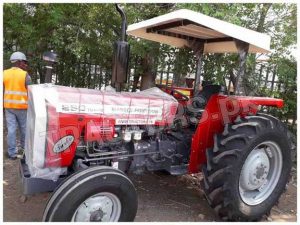
260 turbo massey ferguson

Massey Ferguson is the leading tractor brand in Pakistan with a huge amount of exports to various different regions of the world. It provides a versatile range of top-quality compact and medium-sized tractors according to the exact requirements of customers. It offers robust and rugged farm tractors with an extreme amount of ease and efficiency for farmers to perform all kinds of farming chores in less time. In Pakistan, it is offered with plenty of different model range such as MF 240, MF 260, MF375, MF385, and MF 385 (4WD) a variety of horsepower capacities from 55 HP to 85 HP specifications.

New Holland

New Holland is the second most notable tractor brand in Pakistan which holds significant value and demand among customers in a country. NH Tractors are specifically designed with superior quality and show a true sense of reputation and perfection. It is made of a sleek shiny rigid design structure with powerful engine performance. It is a premium class tractor brand marketed by AL-Ghazi tractors which holds a sound prestige in the agriculture market by exporting genuine quality finest tractors around the globe. It offers NH 480, NH 480 SP, NH GHAZI, and NH 640 tractors with all implements attachments.

BELARUS TRACTORS

Belarus Tractors are 4-wheeled series of tractors designed with sheer precision and sound perfection. These are highly popular brand tractors among farmers in Pakistan and known for their superior class quality and long-term durability. These tractors are offered with different varieties of tractors, specialized tractors, special-purpose machinery, and forest machinery. They are made by Minsk Tractor Works with a robust solid rugged design structure and ideally used for rural farming and loading purposes. The Belarus 510, 510.2, and 80.1 are highly demanded tractors in Pakistan.

URSUS TRACTORS

Ursus tractors are Polish brand imported tractors and agricultural machinery including tractors, loaders, green forage straw and hyaline, spreading and fertilizers, trailers, cultivation and sowing, crop protection, as well as biomass production. These tractors possess high resale value in Pakistan with less fuel consumption, last long durability, as well as affordable repair and maintenance. The most valuable tractor models in Pakistan are Ursus 2812, 3512, and 4512.

IMT TRACTORS

IMT Tractors are popularly known as Industry of Machinery and Tractors manufactured in Belgrade, Serbia. It produces IMT 549, 565, and 577 Model agriculture farming tractors in Pakistan with huge market demand and value among farmers due to their solid rigid design and high-end performance.

Evolution Of Tractors: From Oxen To Machinery

Tractors have become a very important part in the agriculture business as it is machine which needed for everyday use. In the beginning when tractors were not invented oxen and buffalo’s were used for ploughing the field and pulling heavy objects but this was very tiring for the person as well as the animals and the output was very low.
 
Since the tractors were invented lives of the farmers were made very easy as they didn’t have to do most of the heavy work as the tractor could do it with ease. The first tractors were introduced in the 19th century when steam engines were used to power the tractor, these were very useful and it was only the first step to make more advanced and heavy duty tractors.
 
Oxen to machinery
 
With the introduction of tractors cultivation and other farm work was made easy and it could be done at a higher speed thus
increasing the output. By the end of the 1860s the new and evolved form of tractor engines had been invented and it was widely used for agricultural purposes.
 
Steam powered tractors were a great innovation but it didn’t have enough power to operate in all sorts of conditions, in many places often a pair of tractors were used which would pull different implements together may be because it was too heavy for them. However steam powered tractors became a huge hit in the United States and it was used by many of the farmers. Steam powered tractors remained in use for a very long time until the 20th century when internal combustion engines were invented.
 
The first Gasoline powered tractor was introduced in 1892 by John Froelich. He used a Van Duzen single-cylinder gasoline engine was set on a Robinson engine chassis which could be controlled by a gear box. However his engine didn’t receive positive reviews and by 1895 he went out of business. The idea of a gas engine was not a failure and was adopted by many inventors, Dan Al bone who was a British inventor built the first successful gasoline powered engine in 1901 and when he filed a patent on 15 February 1902 and formed his agricultural company. 
 
Tractors have always been evolved and it was till 1926 when Harry Ferguson started his company called the Ferguson Brown Company. He later on accepted collaboration with ford and introduced a new line of Ford-Ferguson tractors.


Al-Ghazi: Plowing ahead

A subsidiary of the Al-Futtaim group of Dubai, Al-Ghazi Tractors Limited is a manufacturer of New Holland tractors in technical co-operation with Case New Holland, the foremost manufacturer of agricultural tractors in the world. Being a household name amongst the farming community, AGTL has a widespread presence across Pakistan, with as many as 82 dealers and 3,000 mechanical workshops spread all over the country. Following the fiasco that was last year, AGTLs half-yearly records show that the company is on the much firmer ground this time around. While 2011 started out on a great note -with Al-Ghazi managing to post a record profit of Rs972.8 million during 1QFY11, which was incidentally the highest since its inception- the following quarters saw a crash in the market following the sudden imposition of a 16 percent sales tax on agricultural equipment.

In the months to follow, AGTL, along with other tractor manufacturers, witnessed tractor sales plummet dangerously and had to suffer long stretches of the plant closure. Fast forward nearly a year, and the second quarter ended sales of nearly Rs4.6 billion- jumping 29 percent from the same period last year – are a testament to the fact that the company is back on track following its previous trajectory of success. Whereas a comparison with sales figures from the same period last year reveals unnaturally flattering growth statistics due to the low-base effect, a comparison of sales against the same period in 2010 reveals a healthy increase of 4 percent during the 2QFY12. However, a similar comparison between FY11 and FY12 at half-year draws negatives for 2012, mainly because of the exceptional first quarter that AGTL had in FY11 which saw them selling 8,602 tractors as compared to 6,004 that were delivered during the first quarter of FY12. Following the company’s initiative to engage pro-actively with farmers and introduce a newer version of agricultural implements, sales have gone up to Rs 7.9 billion at the half year-mark and the pent-up demand from last year means that they are likely to go up higher in the coming quarters.

With profit after taxation going up to Rs596 million versus Rs510 million that was recorded during the second quarter, earnings have climbed up to Rs13.88 per share as compared to an EPS of Rs 11.89 per share recorded at the close of 2QFY11. Looking forward, production and demand for the locally manufactured agricultural implements are likely to remain strong. During the first quarter, AGTL recorded bookings for 9,234 tractors, out of which it could produce only 4,350 units. Similarly, the Sindh government has also announced the launch of the 3rd leg of its rural incentive scheme which will see the distribution of 6,000 tractors among farmers at a subsidized rate. Subsequently, the backlog of orders and demand glut for tractors is therefore likely to keep the industry steady on its feet and AGTL thriving in the coming months.